


Color powder
Pigments are colored granules that are either black or white. Pigments are divided into organic and inorganic powders that are generally insoluble and essentially unaffected physically and chemically when combined with a substrate. Pigments change appearance by selective absorption or by scattering of light. Pigments are often dispersed in carriers or substrates depending on the application, for example in products or inks, paints, plastics or other polymeric materials. Pigments protect the body or grain structure during the coloring process.
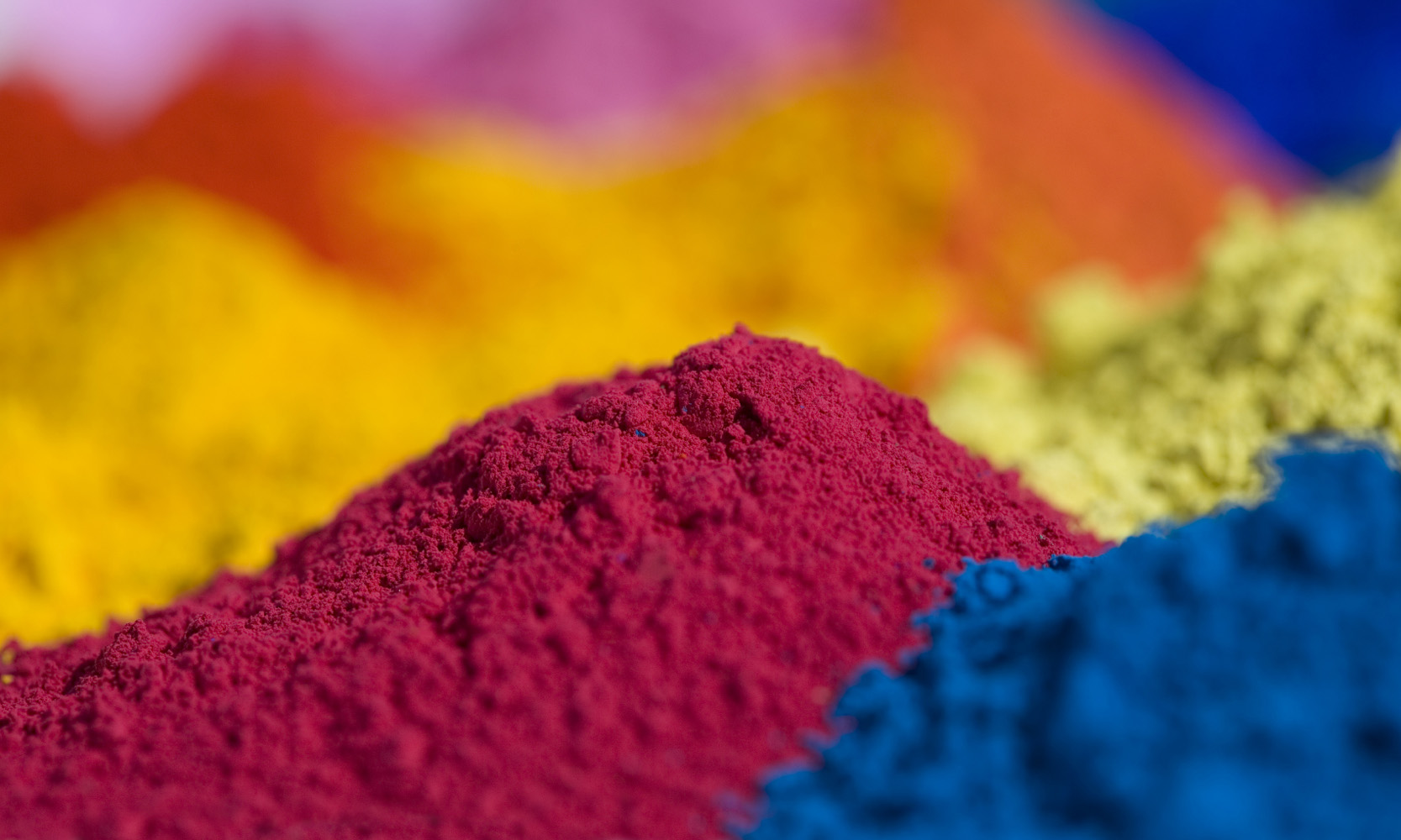
Inorganic pigments
Inorganic pigments are made from non-ferrous metals or insoluble metal salts. Their main ingredients include carbon black and metal oxides or salts such as iron, titanium, barium, zinc, cadmium and lead. Inorganic color compounds may contain artificial inorganic pigments, natural inorganic pigments and natural inorganic colorants.
Inorganic pigments are more commonly used than organic pigments because they are resistant to light, weather, heat, and solvents. However, inorganic pigments also have the disadvantage that the colors are not as bright as organic pigments.
Organic pigments
Organic pigments are powdered solid compounds that can create a variety of colors. Organic pigments include azo pigments, phthalocyanin pigments, anthraquino pigments and dye pigments.
The characteristics of organic pigments are clear, bright and fresh colors, high alkali resistance, acid resistance, and stable temperature. However, when compared with inorganic pigments, the weather resistance, light resistance, and solvent resistance are lower.